【勉強用和訳】Bataille, G. La Part Maudite
本書はジョルジュ・バタイユ著『呪われた部分』の和訳です。
introduction : Bataille et le monde
Ce n’est pas la moinder contradiction de
l’œuvre de Georges Bataille que, vouée à la recbercbe angoissée d’une expression à la limite de l’impossible, elle prenne souvent l’aspect d’une négation acbarnée, alors qu’il ne cessa aussi de dire << oui >> au monde sans aucune réserve ni mesure.
これはジョルジュ・バタイユの仕事における少なくとも矛盾でなく、不可能な状態に瀕した表現の学術研究への回復であり、彼はしばしば激しい拒絶の側面を持って、また、何の遠慮も物差しもなく、世界に対して「イエス」と言うことを止めなかった。
Il était ouvert au monde pour le meilleur et pour le pire, pour le plus intense comme pour le plus bumble et son appétit de l’apprébender sans limite comme sans fausse bonte : en témoignent son souci constant de communiquer, de rapprocber sa pensée de celle des autres, << de tous les autres >>, l’attention scrupuleuse qu’il manifestait au moindre de ses interlocuteurs ; en témoigne aussi l’effort patient et passionné qu’il ne cessa de déployer, surtout pendant la maturité de sa vie ---- souvent au prix d’un travail barassant et fastidieux d’information ---- pour interpréter, à la lumière des intuitions de son expérience tumultueuse, les événements non moins tumultueux qui se déroulaient sous nos yeux : et cela sans néglier aucun des aspects de ces événements, y compris ceux que, par sa formation comme par l’influence de la plupart de ses amis, il eut pu avoir quelque tendance à négliger et qui ressortissent à ce qu’on désigne communément sous le nom d’économie.
彼は、良くも悪くも、最も強烈なものにも、最も不器用なものにも、世界に対してオープンであった: 自分の考えを他の人たち(<<他のすべての人たち>>)の考えと近づけようとする彼の絶え間ない努力や、対話相手の中でも最も小さな人たちに対する彼の細心の注意を目の当たりにすることができる; このことは、特に壮年期において、彼がたゆまぬ忍耐と情熱に満ちた努力を絶やさなかったこと---しばしば、うんざりするような退屈な情報収集の仕事を犠牲にして---も証明している: そしてそれは、彼の訓練や多くの友人たちの影響によって、一般に経済学と呼ばれるものを含め、彼が軽視しがちであったかもしれない、これらの出来事の側面を一切無視することなくであった。
(2024/12/14作成)
【勉強用和訳】Edited by L. R. Binford 1977 For Theory Building in Archaeology 日本語訳
ここではアメリカの偉大な考古学者であるルイス・ビンフォード編著『考古学における理論の構築』(1977年、アカデミックプレス)の日本語訳を書いていきます。特に本書の第1章はビンフォード理論の中心概念であるミドルレンジセオリーについて述べている部分で、特に考古学において引用される部分になります。私は全く英語が得意ではないですし、ビンフォードの語りは特に難解らしいのでまず歯が立たないと思いますが頑張りたいと思います。これは単に私のモチベーションアップのために書いている記事なので参考にする場合は自己責任でお願いします。そのほか、和訳についてもっとこうした方がいいというアドバイスがありましたらコメント頂ければ幸いです。
凡例
・原典は、Binford, L. R. 1977 For Theory Building in Archaeology, Academic press.である。
・訳をつうじ、( )は原文にあるもの、[ ]は訳者が加えたものである。
・訳は原文の段落ごとに記す。
General Introduction
Lweis R. Binford
University of New Mexico, Albuquerque
- Much has been written regarding the claims for a "New Archaeology," and there are arguments that attempt to assess the successes or failures of this alleged "movement." As far as I am concerned, however, much argumentative literature obscure the issues, at least those issues that I have tried to stress over a substantial period of time involving though, research, writing, and teaching. I will not offer here an exhaustive critique of current debates, but I will point to certain differences between my views of archaeological science and the views of some of those who are generally lumped together with me as "New Archaeologists." In so doing, I will attempt to show that understanding is difficult to achieve, and that misunderstanding and confusion are common in the hands of struggling scientists.
「ニューアーケオロジー」に対する批判が数多く書かれている、と同時にこの”運動”が成功か、失敗かを評価しようとする議論がある。しかし、多くの評論は問題を曖昧にしており、少なくともそれらの問題は、私がこれまでに行った思索や、研究、執筆、教育の実質的な期間で取り除かれた。ここでは現在の議論についての徹底的な批判は行わないが、私の考古学的科学の視点と、一般的に私と一緒に「ニューアーケオロジスト」としてまとめられている一部の人々の見解との間には、特定の違いがあることを指摘したい。そうすることによって、両者の到達点に対する理解が異なることを提示することを試みたい。そうした誤解と困惑は、科学者の中では普通である。
- The most commonly cited and debated point I have tried to emphasize is that to be productive, a scientist must operate with a self-conscious awareness of the ideas and assumptions by which he proceeds. I have suggested that facts do not speak for themselves; alleged inductivist approaches, which seek empirical generalization, will not move us in the direction of explanation, and therefore understanding, of the facts observed. I have suggested that a self-conscious use of deductive methods is a prerequisite for scientific achievement. Since these suggestions appeared, there have been many attempted demonstrations and programmatic discussions of them. It is my impression that most of these have been misleading or simply plain distortions of scientific method. Allow me to empathize the point that scientific methods are designed to evaluate ideas. Science seeks to employ empirical materials in such evaluations. Thus, the problem that any scientist must understand is how one moves from ideas to facts or observations, and in turn, how one may then relate the empirical findings back to ideas in an evaluative manner. Many who have been confused about these points tend to view empirical materials as sources or inspiration for ideas. This may be true in many cases, but the sources for ideas are not the concern of science directly; the primary concern is only the evaluation of ideas once they have been advanced.
最も一般的に引用され、議論されている点で私が強調しようとしたのは、科学者自身が作り出すアイデアと仮定の自己意識的な認識(self-conscious awareness)で行動しなければならないということである。私は事実がそれ自体を物語っているわけではないと指摘してきた。すなわち、日常的な経験による一般化を求める帰納主義的アプローチでは、観察された事実の説明や理解の方向に導くことはないということである。また、演繹的方法の自己意識的な使用が科学的成果の前提条件であると指摘してきた。これらの提案が登場して以来、多く実践的な試みとそれらに関する討論が行われてきている。私の印象では、これらの多くは誤解か、科学的方法の簡素な曲解を招いている。理解してもらいたいのは、科学的な方法はアイデアを評価するためにデザインされているという点である。科学とは、このような評価に実験に基づく材料を探究することに努めるものである。したがって、科学者が理解しなければならない問題は、どのようにしてアイデアから事実や観察に至るのか、そして次に、どのようにして経験的な発見をアイデアに結びつけて評価するのかということである。これらの点について混乱している人の多くは、経験的な材料をアイデアの源泉あるいはインスピレーションと考える傾向がある。多くの場合、それは正しいかもしれないが、アイデアの源泉は科学の直接の関心事ではない。すなわち、主な関心事は、前進してきているアイデアを評価することである。
(2024/12/13作成)
- At this point, the reader may justifiably ask questions regarding the kinds of ideas that scientists seek to evaluate. Are all ideas and concepts proper targets for scientific investigation? In one sense, the answer is yes, but in many important ways, it is no! The scientific method addresses itself to the evaluation of theory.The introduction of this term implies that all ideas and concepts are not aspects of theory, although all theory is essentially ideational and conceptual in character.
この時点で読者は、科学者が評価しようとするアイデアの種類について、合理的な疑問を抱くかもしれない。すべての考えや概念は、科学的探求の対象としてふさわしいのだろうか?ある意味では答えはイエスであるが、多くの重要な点ではノーである!科学的方法は理論の評価に関するものであり、この用語の導入は、すべての理論が本質的に観念的、概念的なものであるにもかかわらず、すべての観念や概念が理論の側面であるとは限らないことを意味している。
- In moving between ideas about the world we live in and empirical observations of this world, the scientist must face a major problem: namely, what meaning is to be attributed to empirical observations? Only when observations have been given meaning can we discuss the nature of their relevance to ideas. That is, we can use only relevant empirical observations to argue the utility of our ideas. Relevance is established through arguments attempting to warrant that particular observations reliably and unambiguously inform us about certain conditions or states of systems or variables. Such arguments are always phrased in terms of the meanings given to observations and not simply in terms of the character of the observations themselves.
私たちが住んでいる世界についての考えとこの世界の経験的観察の間を移動する際に、科学者は大きな問題に直面しなければなりません:すなわち、経験的観察にどのような意味があるのでしょうか? 観察に意味が与えられてはじめて、その観察とアイデアの関連性の本質を論じることができる。つまり、私たちのアイデアの有用性を主張するために、関連性のある経験的観察だけを使うことができる。 関連性は、ある観測結果が、システムや変数のある条件や状態について、確実かつ一義的に知らせてくれることを保証しようとする議論によって確立される。そのような議論は、単に観察自体の特性の観点からではなく、常に観察に与えられた意味の観点から表現されます。
- For instance, if we have the idea of a variable for example, population pressure we may immediately ask what empirical observations reliably and unambiguously inform us regarding the condition of this variable in different settings. Do we count numbers of archaeological sites, numbers of burials, numbers of broken pots, and so on, per unit of time? If we can advance a strong argument to support the contention that some class of empirical material reliably and unambiguously informs us about population pressure, we have provided meaning to that material through an operational definition of population pressure. In turn, we have simultaneously advanced a convention for assigning meaning to a specified class of empirical material. A definition is not an hypothesis. A definition specifies the relationship between a concept, word, or phrase, and a class of empirical or observational experience. On the other hand, an hypothesis asserts a relationship between two or more independently monitered variables said to be operative in the empirical world. When testing an hypothesis, the scientist must employ independent instruments to measure the multiple variables. He must have operational definitions of the variables stated in the hypothesis and, in turn, must specify the character of the anticipated interaction between the two or more Classes of defined observational materials. Was the character of the observed in teraction anticipated accurately by the hypothesis? If so, the ideas about the way in which the world works, from which the particular hypothesis was argued or deduced, can be said to have some utility.
例えば、私たちが人口圧に関する変数の考え方を持っている場合、異なる設定の変数の条件においてどのような経験的観察が確実かつ明確な情報を我々に与えてくれるかをすぐに尋ねるかもしれない。単位時間当たりの遺跡の数、埋葬墓の数、土器の数などを数えるのだろうかと?ある種の経験的資料が、人口圧について確実かつ明確に教えてくれることを強く主張できれば、人口圧の運用上の定義を通じて、その資料に意味を与えたことになる。同時に、経験的資料の特定の分類に意味を与えるための慣習を提供したことになる。定義は仮説ではない。定義とは、ある概念、単語、語句と、経験的あるいは観察的な経験のクラスとの関係を特定するものである。一方、仮説は、経験的世界で作用するとされる、独立に観測された2つ以上の変数の関係を主張するものである。仮説を検証する際、科学者は複数の変数を測定するために独立した機器を使用しなければならない。また、仮説の中で述べられている変数の運用上の定義が必要であり、さらに、定義された2つ以上の観測材料のクラスの間で予想される相互作用の特徴を特定しなければならない。観察された相互作用の特徴は、その仮説によって正確に予測されたのか?もしそうなら、その仮説が論じられた、あるいは推論された、世界の仕組みに関する考え方は、何らかの有用性を持っていると言える。
- Science is a method or procedure that directly addresses itself to the evaluation of cultural forms. That is, if we view culture as at least referring to the particularly human ability to give meaning expediently to experience, to symbol, and, in turn, view experience through this conceptual idiom, science is then concerned with evaluating the utility of the cultural tools produced.
Under these conditions, there is a paradox in that the scientist must use conceptual tools to evaluate alternative conceptual tools that have been advanced regarding the ways in which the world works. He never uses meaningless empirical material, only observations with alleged, and hopefully specific, attached mean-ings. There is no way out of this paradox: An evaluation of one set of ideas is dependent upon the accuracy of an assumed set of meanings, not currently under investigation, about what our observations meaningfully imply! This paradox is at the heart of the so-called "uncertainty principle," which asserts that we cannot prove anything positively; we may only negate hypothetical proposi-tions. In any scientific argument, there are at least two types of tentative proposi-tions: hypotheses deduced from ideas which we seek to evaluate, and definitions advanced as part of the argument that seeks to warrant the assertion that certain empirical materials may justifiably be used in evaluating the hypothesis. There is much confusion in the literature regarding different types of propositions and how they may be evaluated. Much of the recent discussion regarding scientific methods has failed to cope with this crucial paradox and has confused operational definitions with hypotheses.
For instance, James Hill's (1968) work is frequently cited as an example of hypothesis testing (see Watson, Le Blanc, and Redman 1971:37-45) and, there-fore, as an example of the hypothetico-deductive method. I have not been able to find a single hypothesis in his work. (In all fairness, Hill does not make this error, only those who write about this work do so; he faithfully uses the term "proposi-tion.") He addresses himself to a problem of identity. How do I archaeologically identify a storage room? He is concerned with warranting an operational definition for the concept "storage room." He is in no way testing an hypothesis regarding the expected forms of interaction between two or more variables, each operationalized independently for observational purposes. Hill's work is an excellent example of a strongly warranted argument that when certain observations are made and found to be congruent in rooms in sites of the American South-west, one is justified in assertings that the room was used as a storage room in the past. The argument specifies the definiens of the concept "storage room." When one's experience matches the definiens, one is, by convention, justified in asserting that the room in question was a storage room in the past. Hill provides us with an operational definition for a concept that is useful in a restricted geographical and temporal frame. His work in no way allows us to understand (a) why he thinks such an operational definition is needed, (b) what ideas about dynamics would
require the identification of storage rooms, or (c) how identifications, once they have been made, would be used in hypothesis testing.
In contrast, I might state as an example of an hypothesis that, other things being equal, dependence upon stored food will increase as the diversity of the subsistence base decreases in environments with less than 365-day growing sea-sons. Alternatively, other things being equal, dependence upon stored food will increase as the size of the consumer population increases in environments of less than 365 days of growing season. I will not attempt to argue the theory from which these hypotheses have been deduced; rather, they are simply cited as examples. Given these aforementioned hypotheses, we might view Hill's work as an attempt to operationalize an instrument for measuring dependency upon stored food. Some might argue that his operationalization- namely, the identification of storage rooms and perhaps the counting or measuring of storage room volume is inadequate or ambiguous in that there are possibly other modes of storage or that things other than food may be stored in storage rooms. What I am suggesting is that, although one may offer strong support for the meaningful identification of some observed phenomena, this must remain merely an exercise or, at worst, a trivial endeavor, since the context of relevance in science for such attempts derives from the problem of operationalizing variables stated in hypotheses. Hill's work does not provide us with such a scientific context of relevance beyond some functional "understanding" of pattern variability in the archaeological record. Here Hill's work becomes unclear, since "understanding" is sought in the absence of theoretical relevance.
Aside from the confusion about hypotheses and definitions, there is a more general confusion about propositions and hypotheses. All propositions are not hypotheses. Many propositions are related to the evaluation of the adequacy and unambiguous nature of definitions. A classical, logical form of such a proposition is that all swans are white. Observations of black swans in Australia refutes the proposition. Has an hypothesis been tested? The answer is emphatically NO. Implied here is that the concept "swan" may be defined by criteria other than color, and, at one stage of our knowledge, we believed that white color was a powerful defining criterion of the concept "swan." Further observation shows that this is an unwarranted defining characteristic. Has such an observation refuted some theory regarding the pattern of interaction between color variables and other morphological or physiological variables? No, it has simply been shown that a particular incomplete definition of the concept "swan" is inadequate or ambiguous!
Let me draw another example from the recent literature, a work by Steven A. Leblanc (1973: 199-214). Leblanc asserts that the logic used to evaluate a proposition has a basic form, and persons employing the proper form of logic, regardless of the content of the proposition, should not be subject to criticism, such as that of Flannery (1973:47:47-53). He also attacks the work of Tuggle, Townsend, and Riley (1972) and indirectly the work of Meehan (1968) as characterized by confusion converning "models" and "laws." In my opinion, neither understands
the differences between definitions and hypotheses, and Leblanc is far from such an understanding. Leblanc further confuses the issue by attempting to argue that good science is dependent on the adherence to the proper logical form of evaluation regardless of the character of the proposition or its role in scientific argu-ment! One does not advance science by spending one's time evaluating definitions simply because they exist. Who cares whether they are accurate or inaccurate if they are irrelevant? Relevance in science derives from the relationships between theory and hypotheses; propositions in hypothetical form generated in a theoretical void remain at best some form of empirical generalization. If our work misses this point, regardless of how well our procedures meet certain criteria of formal logic, we are not scientists. We may be logicians, Jesuits, or "law and order archaeologists," but we are not productive scientists simply because we adhere to a formal paradigm of reasoning. If we work only with existential propositions, such as "the size of a Bushman site is directly proportional to the number of houses on it" -an observation inductively summarized from direct experience rephrasing it to read "the size of an archaeological site is directly proportional to the number of houses on it" does not constitute theory building. If we then proceed with good logic and method to evaluate the general accuracy of the statement, what has been evaluated beyond the existential accuracy of the proposition? Nothing necessarily has been evaluated. In short, we have perhaps proven a universal fact, but we have in no way validated any theoretical proposi-tion. One does not build theory by accumulating universal facts or empirical generalizations, no matter how complex they may be. This is not to say that knowledge of such empirical relationships or forms of patterning may not be useful, but that their utility can be evaluated only with regard to (a) the degree to which they serve to inspire questions as to why the world is the way it appears to be and (b) the degree to which they may be useful in arguments of relevance attempting to relate concepts of theoretical interest to facts of the empirical world.
Both of these criteria ask how they stimulate theory building, not how they help to evaluate theory or to provide us with theory directly. What I am suggesting is that polemic assertions that one is working "hypothetico-deductively" are meaningless when only propositions of an existential or definitional character are involved. Such a stance is a misguided inductive strategy. It results in, as Flan-nery (1973:51) has aptly phrased it, "Mickey Mouse laws.
It has been suggested that there is a procedure or third "paradigm" consisting of the evolutionary-systems "package" with a statistical-probabilistic wrapping (Willey and Sabloff 1974:196) that may prove useful in archaeology. This, of course, is not a new suggestion, and it is one that has met with crowning failure whenever it has been attempted- as, for example, in sociology. Statistical or probabilistic statements as to relationships between things are simply complex empirical facts. The only assumption one needs to make in order to project from such facts is that the system will remain unchanged, that things will stay as they are. These are projections, not predictions, since the latter require the specification of the conditions under which both stability and change will be manifest. Predictions require understanding of dynamics, not merely simple comprehension of patterning. In my opinion, evolution refers to the processes responsible for changes and diversification in organization; it does not refer to the products of evolution and the patterning that we may observe in these products when they are viewed temporally or spatially. The products, including patterning, are what we must explain with evolutionary theory. Statistical summaries and probabilistic statements about the patterning do not explain; they simply describe.
This form of criticism brings us to a discussion of what I view as an interesting phase of archaeological history: Archaeology-1976. I have argued, perhaps with some effectiveness, that the traditional paradigms of archaeology were in-adequate, misleading, and essentially, a set of conventions for accommodating archaeological observations to a given cognitive map of man, the past, and cultural dynamics. By opening Pandora's box, by questioning the accuracy of meanings traditionally assigned to observations, and by insisting that we concern ourselves with the scientific task of evaluating ideas and concepts used in archaeol-ogy. The field was placed in a self-evaluative posture. Reactions have been varied but of essentially three forms. (1) There has been a rejection of the entire argument and an adherence (with tenacity) to traditional views (Flannery's [1973] old and new fogies). (2) There have been impatient and enthusiastic excursions into the application of "scientific" methods and rhetoric in the absence of any substitu-tive or original theory. Here we see an overemphasis on method or logic coupled with an apparent faith that the application of logical methods will result in the generation of theory (the law-and-order people of Flannery [1973]). In my opin-ion, this has been a return to an inductive strategy. (3) Finally, there are some who view the development of theory as the primary concern. This is a creative process for which there are no methodological rules to insure success. Given a theoretical vacuum left by the shaking of traditional archaeological ideas and conventions, we must seek new ideas, concepts, and their theoretical integration with reference to how the world works, why man behaves the way he does at different times and places, and how we may understand recognized patterns of changes and diversity in organized human behavior. Only to such theories may the scientific method be properly addressed. Thus, today's challenge is in theory building, and thus far little progress has been made, although many persons have seen the challenge and accepted it.
As I currently view this challenge, there are urgent needs for theory building on at least two levels. One level is what I refer to as middle-range theory. If one accepts observations made on the archaeological record as contemporary facts along with the idea that such facts are static, then clearly basic problems for the archaeologist include (a) how we get from contemporary facts to statements about the past, and (b) how we convert the observationally static facts of the archaeological record to statements of dynamics. Both of these problems pose the question of meaning. What meaning may we justifiably give to contemporary static facts regarding past dynamics? What conditions of dynamics, not available for observation, produce the forms and structures observable as static patterning in the archaeological record? In approaching this problem, we must develop ideas and theories (middle-range theory) regarding the formation processes of the archaeological record. Only through an accurate understanding of such processes can we reliably give meaning to the facts that appear, from the past, in
the contemporary era.
It is interesting that, in the early days of the development of the science of geology, the focus of study was directed toward the elucidation of formation processes. What dynamic conditions produce what kinds of static effects? What remains in a geologic section can be reliably viewed as deriving from the operation of erosional processes in the past? Clearly such questions must be investigated through the study of contemporary facts, both dynamic and static. Early arguments in the field of geology centered around the validity of assumptions of uniformitarianism-that the same dynamic processes operative in the past are operative today. Obviously, such an assumption must be warranted to a high degree, since it is central to the development of meaningful arguments about the past that are deduced from contemporary observations on the geological or archaeological records. Without the development of a body of theory treating the relationships between statics and dynamics, and, also important, approaching this development with a deep concern for the degree to which uniformitarian assumptions may be justified, no real progress will be forthcoming.
I consider this the challenge to develop "middle-range theory"; I consider it middle range because I believe that we seek to make statements about the past in order to evaluate ideas we may hold about the conditions that brought about change and modification in the organization of dynamics occurring in past living systems. We seek understanding of the processes responsible for change and diversification in the organizational properties of living systems. In approaching this problem, we seek the development of general theory. The archaeologist must seek parallel development in theory relating to determined change and variability in processes resulting in the static facts remaining for our observation. Only with developments in both general and middle-range theory can the "scientific" method be appropriately employed. In the absence of theories and ideas for evaluation, discussion of appropriate scientific methods seems strangely misplaced.
Why do I suggest that the development of general and middle-range theory must proceed hand in hand? Simply because, in the absence of criteria of rele-vance, we may waste much time in developing middle-range theory concerning the dynamic significance of certain static facts that prove to be irrelevant to the evaluation of our ideas about the general determinant processes that promote change and diversification in living systems. The field must advance as a whole. Advances in middle-range theory divorced from general theory may prove to be a waste of time; similarly, advances in observational techniques or "field methods" may prove irrelevant once we have some idea of the kinds of data needed for evaluating our ideas.
In the following essays, we present (a) a variety of attempts to explicate, not so much scientific methods conceived of as a set of procedures, but the particular functions that scientific methods play in seeking understanding and explanation; a number of provocative discussions aimed at the development of middle-range theory_-namely, suggestions concerning the relationships between dynamics and their static by-products remaining for the archaeologist to observe; papers treating a further complication arising from the operation of noncul-tural dynamics on archaeological remains that modify the statics away from their original patterns as derived exclusively from the dynamics of cultural system-in Schiffer's (1972) terms, "N-transforms"; and finally (d) a number of papers that address more general issues relating to both the evaluation of ideas advanced, as well as provocative suggestions concerning ideas not previously considered in seeking to understand the processes responsible for changes in dynamics of cultural systems.
The chapters in this book are the products of students and faculty of the University of New Mexico. Most of the papers grew out of an advanced seminar I conducted with graduate students and colleagues, which focused on the contemporary state of archaeology. Our aim in so doing was, hopefully, to isolate areas of research critical for advancing the field. The papers represent specific endeavors in that direction. We have attempted to integrate the diverse papers by means of cross referencing and in discussions of relevance as to how and why we viewed the subject covered as important and in need of study.
The organization of the book implies some opinions and convictions that may not be directly apparent in the context of the chapters. As has been suggested, most theory is at some point dependent upon the accuracy of uniformitarian assumptions namely, that things were in the past as they remain in the present as far as conditions or processes are concerned. As far as man is concerned, such an assumption cannot be supported over the span of time with which archaeologists are concerned. Gertainly, early populations of Australopithecus were not the same kind of creatures as modern man and, in turn, were probably not even capable of the kinds of behavior that we take for granted among ourselves. As I have pointed out many times, this means that interbretations of behavior from the products of early man (tools and artifacts) is likely to be a very risky business indeed. We may reasonably ask ourselves whether or not there are other classes of data remaining from the past which might better support uniformitarian assump-tions. In short, are there not classes of data available to us for which a more reliable set of conditions might be projected into the past than for projections of human behavior per se? I answer with a resounding yes. I further reason that there are at least three domains of data that are archaeologically recoverable which, if developed theoretically, well might serve as excellent reference dimensions against which to view and evaluate different examples of hominid behavior relative to one another and to behavior of modern man as documented ethnog-raphically. The first domain is ecological and respect to species with which man interacted in the past. For many species, examples are still available for direct observation concerning their behavior and qualities that might have been useful to ancient populations. Some of the species of aquatic shellfish, fish, and even some terrestrial examples are cases in point. We may evaluate these species today in order to determine their periods of availability, abundance, and utility to man under different conditions. Given such knowledge, we may then evaluate the actual patterns of use employed by ancient populations and the conditions under which we might expect variable usage. Such arguments are developed or eluded to in the chapters in both Parts I and II of this book. Additionally, I reasoned that, since most animals can be known anatomically, that is, we may know quite accurately the numbers of different bones in an animal of a given species form the past, we may study the frequencies of parts actually used, transported, or abandoned by ancient people as a direct measure of their economic and logistical sophistication and appropriate variable behavior in different settings. The first steps in our efforts toward a middle-range theory with emphasis on anatomical part frequencies is introduced in the chapter by Bertram and myself. Thus, the ecological and anatomical domains are emphasized in the chapters of Parts I and Il in this book.
The third domain that I envisioned as having potential for theoretical development was that of space use. My original thoughts were simple. Human or hominid behavior always takes place in a spatial theater. The way in which this behavior is organized must be conditioned by certain relationships between the properties of alternative spatial organizations and the labor and social pressures operative during periods of organized behavior. If we could isolate even some of the constraints that are operative, within a dynamic system, on the character of spatial usage, we might well be able to analyze at least some aspects of past behavioral systems in structural terms rather than the more commonly emphasized formal or content categories of tool frequencies, types, and so on. The two chapters in Part III address themselves to this problem. One deals with the recognition of structural properties in the archaeological record, and the other treats the problem of middle-range theory building in the spatial domain.
In Part IV are three papers which seek to relate some aspects of systems organization meaningful to the static facts of the archaeological record or, con-versely, some patterning in such facts to variables or states characteristic of past ecological interactions or systems functioning. These are important concerns, and much more work is needed in this area of archaeological theory building. The term "new archaeology" has been much used. In the absence of progress toward usable theory, there is no new archaeology, only an antitraditional archaeology at best. I look forward to a "new archaeology, but what has thus far been presented under the term is an anarchy of uncertainty, optimism, and products of extremely variable quality.
In my opinion, the new archaeology was something of a rebellion against what was considered sterile and nonproductive endeavors by archaeologists. Rebellion cannot continue simply for rebellion's sake. The "stir" created in the 1960s has not resulted in many substantial gains. If we are to benefit from the freedom of nonparadigmatic thought that has perhaps resulted from our little rebellion, such benefits must be in the form of substantial new theory and knowledge of both the archaeological record and the relationship between statics and dynamics- -archaeological formations processes. This book is an attempt to move in this direction. As such, we hope that some advance in the field has been accomplished and that, with this volume available, others will be to stimulated to address the difficult task of theory building and methodological development. If the argumentative environment of the 1960s stimulates only further argument, then the "new archaeology" will have been a failure, providing only social excitement in a relatively dull field.
REFERENCES
Flannery, Kent V. 1973 Archaeology with a capital 'S'. In Research and theory in current archaeology, edited by Charles L. Redman. New York: John Wiley. Pp. 47-53.
Hill, James N. 1968 Broken K pueblo: Patterns of form and function. In New perspectives in archaeology, edited by Sally R. and Lewis R. Binford. Chicago: Aldine. Pp. 103-142.
LeBlanc, Steven A. 1973 Two points of logic concerning data, hypotheses, general laws, and systems. In Research and theory in current archaeology, edited by Charles L. Redman. New York: John Wiley. Pp.199-214.
Meehan, Eugene J. 1968 Explanation in social science: A system paradigm. Homewood, Ill: Dorsey Press
Schiffer, Michael B. 1972 Archaeological context and systemic context. American Antiquity 37:156-165.
Tuggle, H. David, Alex H. Townsend, and Thomas J. Riley 1972 Laws, systems, and research designs: A discussion of explanation in archaeology. American Antiquity 37 (1):3-12.
Willey, Gordon R., and Jeremy A. Sabloff 1974 A history of American archaeology. San Francisco: Freeman.
Watson, Patty Jo, Steven A. LeBlanc, and Charles L. Redman 1971 Explanation in archaeology. New York: Columbia University Press.
浦戸諸島 桂島 活動記録
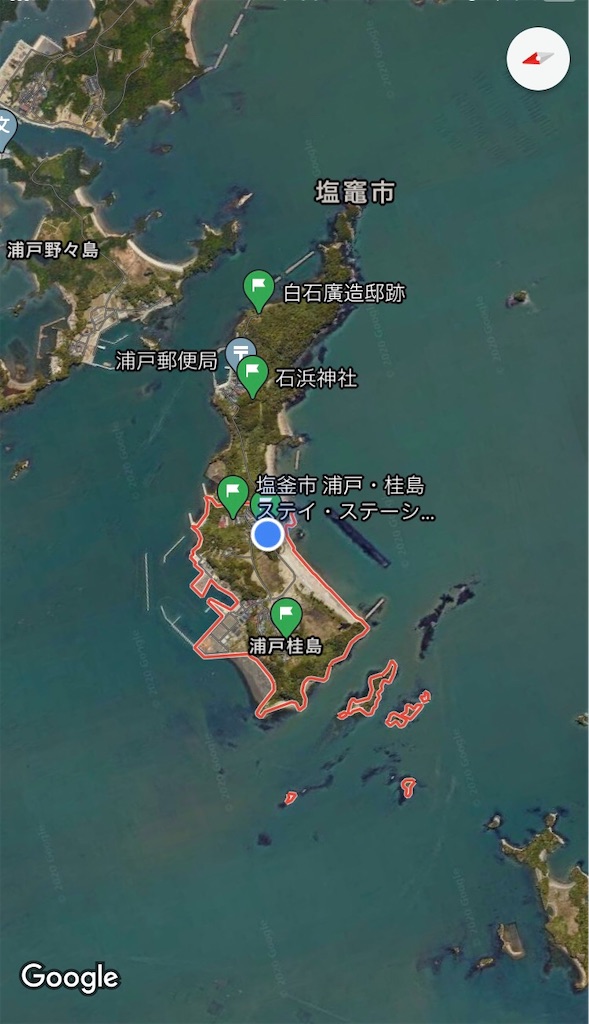
〈これまでの概要〉
本学の地域創生学部のH先生とD先生の両氏は、3.11の震災以降、復興支援活動として塩釜市桂島へ月に2回、学生を連れて島へフィールドワークに訪れてきた。島民のヒアリング調査でのニーズの把握からはじまり、地域学習の要素と絡めながら、地元の小中学生向けの地域教育プログラムを作成し、イベント事業なども行なってきている。
私は、歴史学科でありながら、昨年より社会教育主事関連の科目履修をきっかけに両先生方と運良くつながりをもたせていただき、月に一度は島に来て活動を行なっている。
桂島での震災復興として、ハード面は一通り完了したと言って良いが、島民の心の負担は未だに癒えていないように思う。
現状の課題
・白石廣造邸跡周辺の竹林の増加による遺跡の浸食。
・地元漁師(特に牡蠣漁師)の減少
・島民及び移住者の減少。背景には、松島は日本三景の一つとして自然環境保護の観点から新たに建物が建てられないことなどが挙げられる)
活動計画
・地域教育モデルの拡大
・文化財等の案内板設置
・自然、歴史、文化、震災から現在などの要素を取り入れたパンフレットの作成
・桂島産牡蠣の周知など
展開
・地域教育と復興を織り交ぜた学生の教育活動や一般向けの観光事業を提供するNPOの立ち上げ。
今回の予定
20/03/02〜05 竹ボイラーの稼働、竹炭の製作実験、案内板設置、ヒアリング調査等。
03/02 東京から4時間 桂島本土到着。
民宿スターボードに宿泊。

夕食は、刺身の盛り合わせと牡蠣の天ぷらなどをいただきながら一杯。
03/03
6時に起床、釣り。

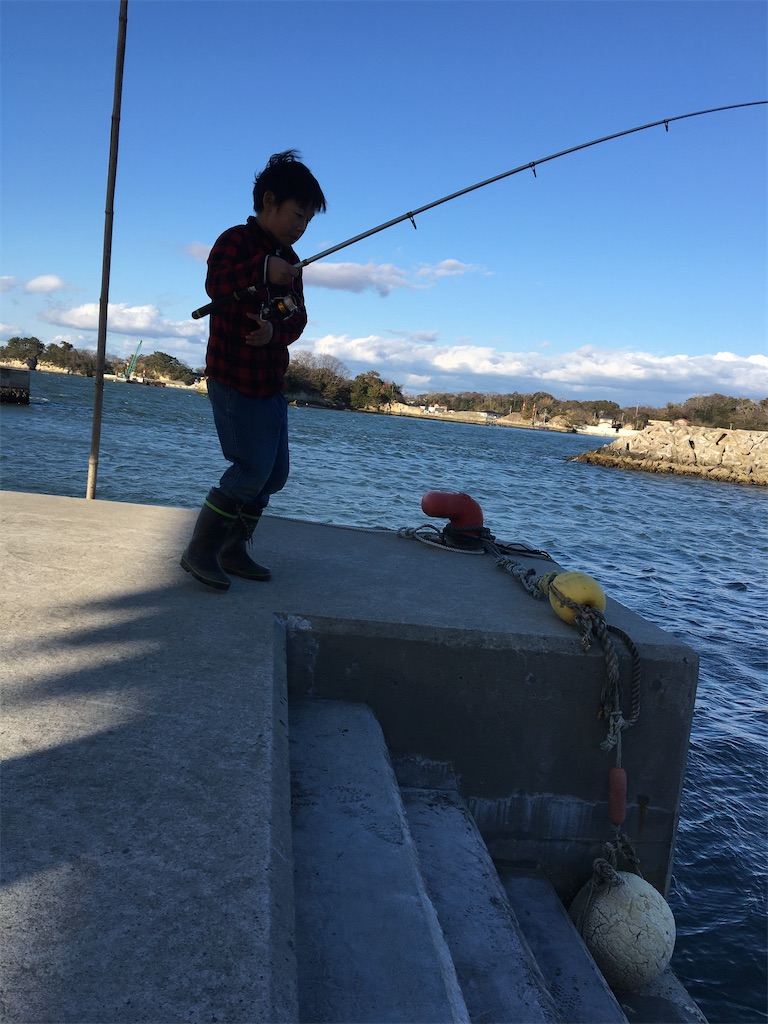
午前中 竹ボイラーと竹炭作成
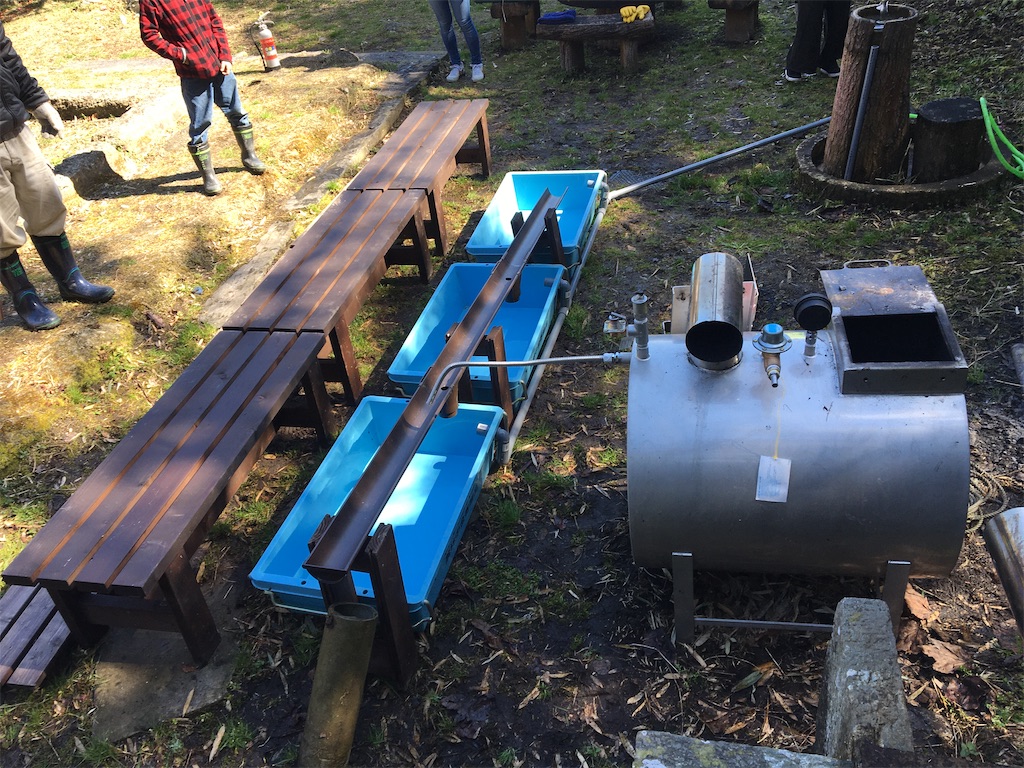
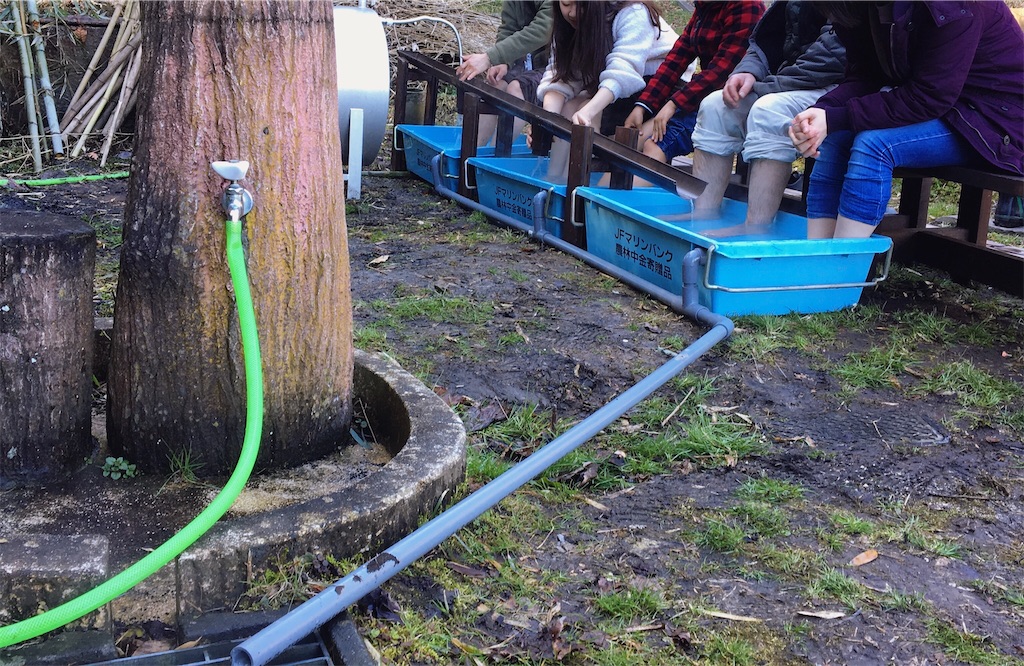
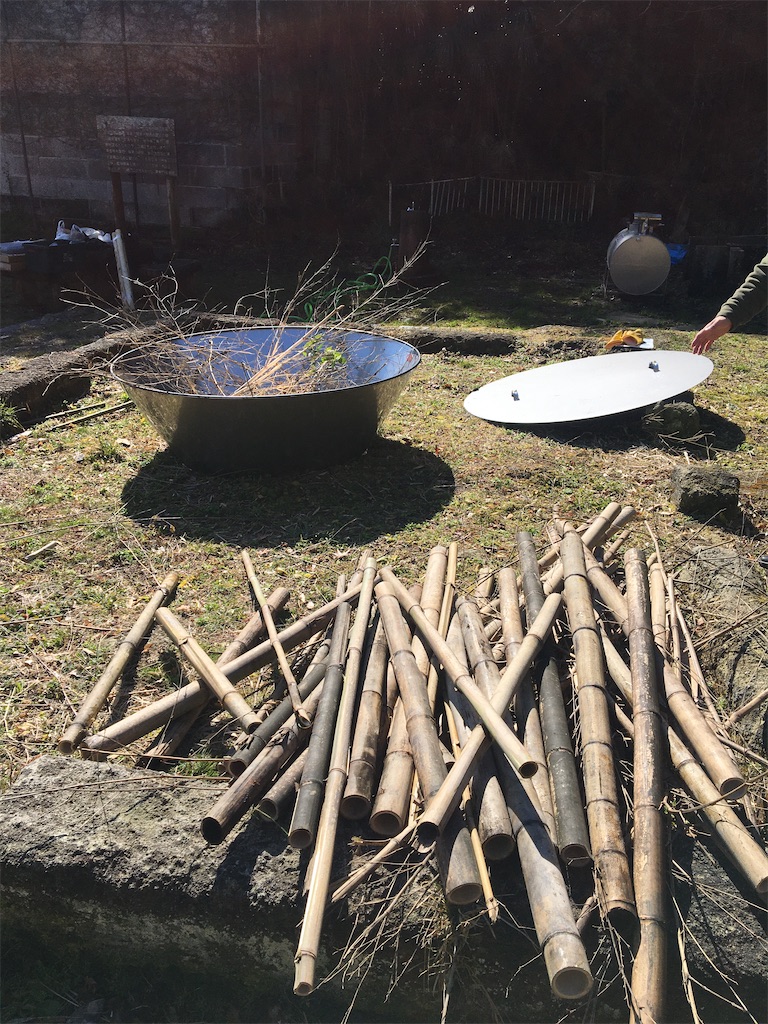
竹ボイラーは、約30分の加熱で最高50度近くのお湯を流すことができ、十分に足湯を行えることが確認できた。
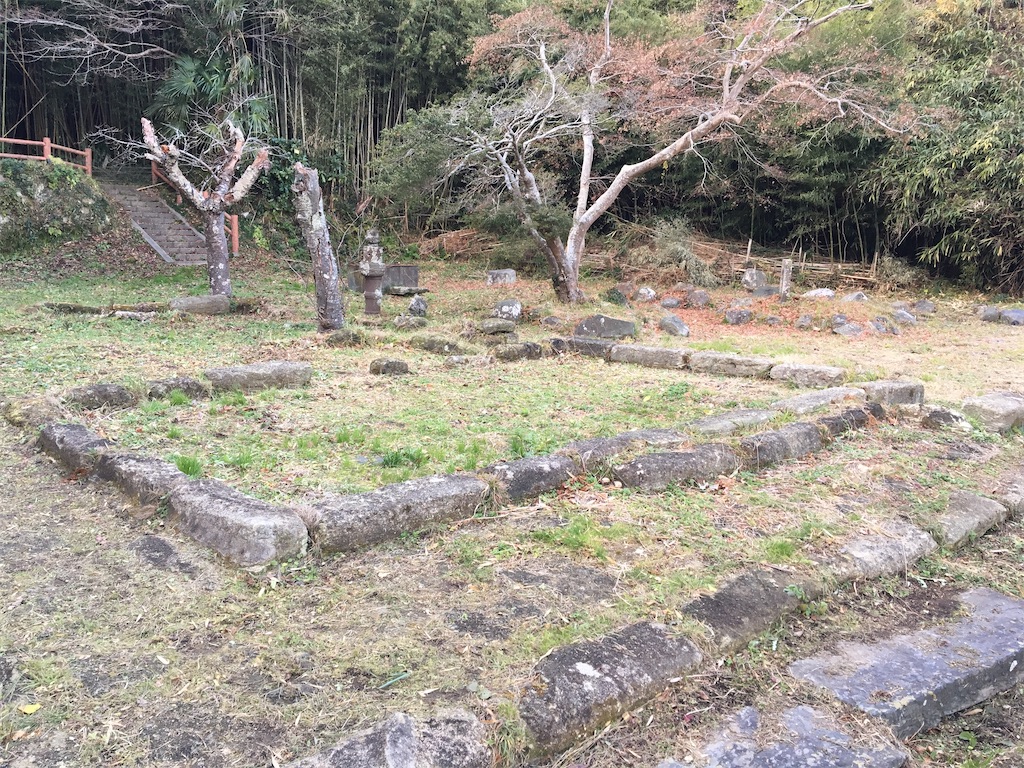
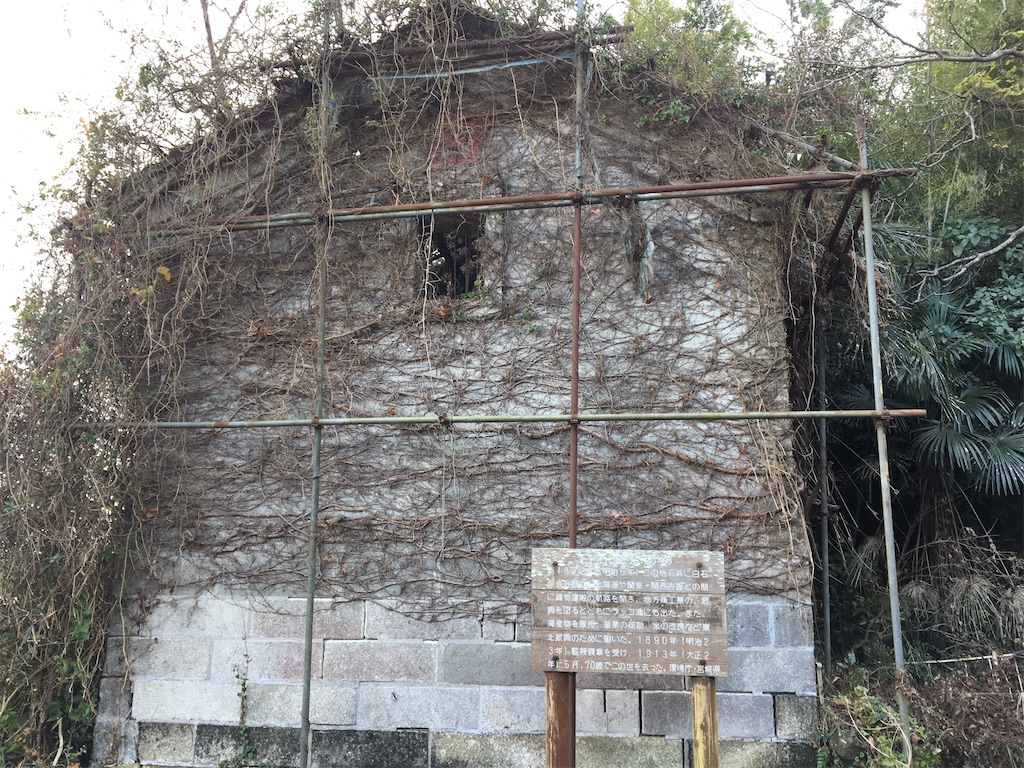
↑白石鑛造邸跡
解説
明治期のラッコ漁を中心行い、貿易の拠点となる。島内には「ボラ」と呼ばれる岩壁を四角に掘り込んだ貯蔵庫があり、当時は舐めしたラッコの皮を保管していたという。
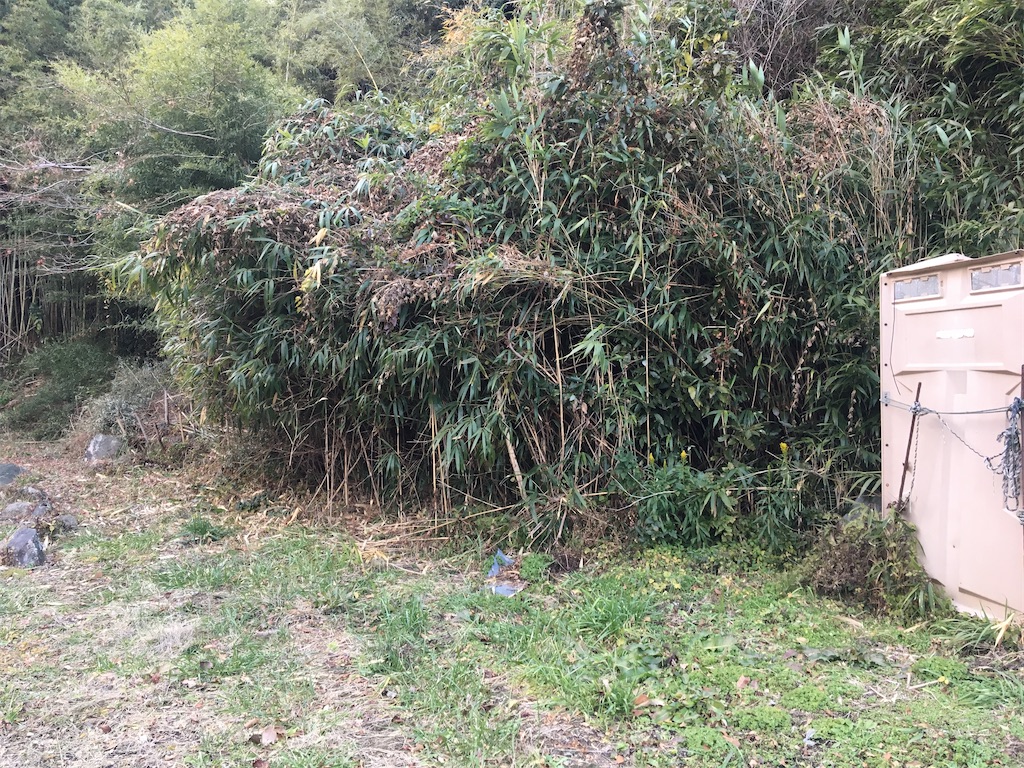
浸食の進む竹藪から適度な長さで竹を切り出します。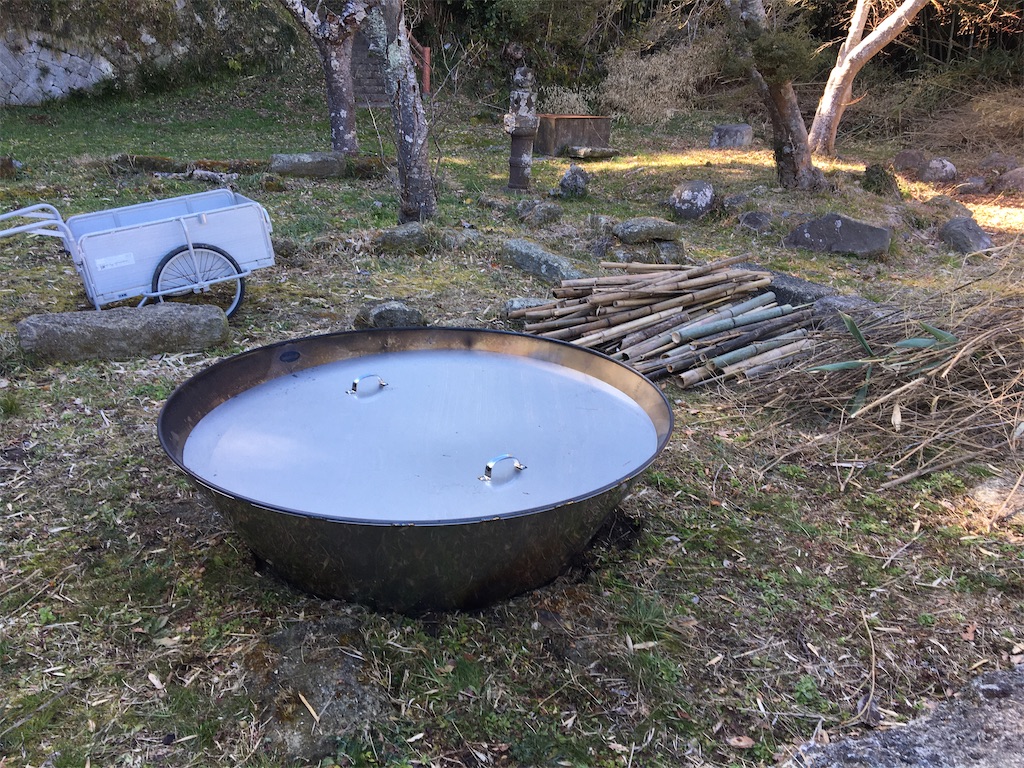
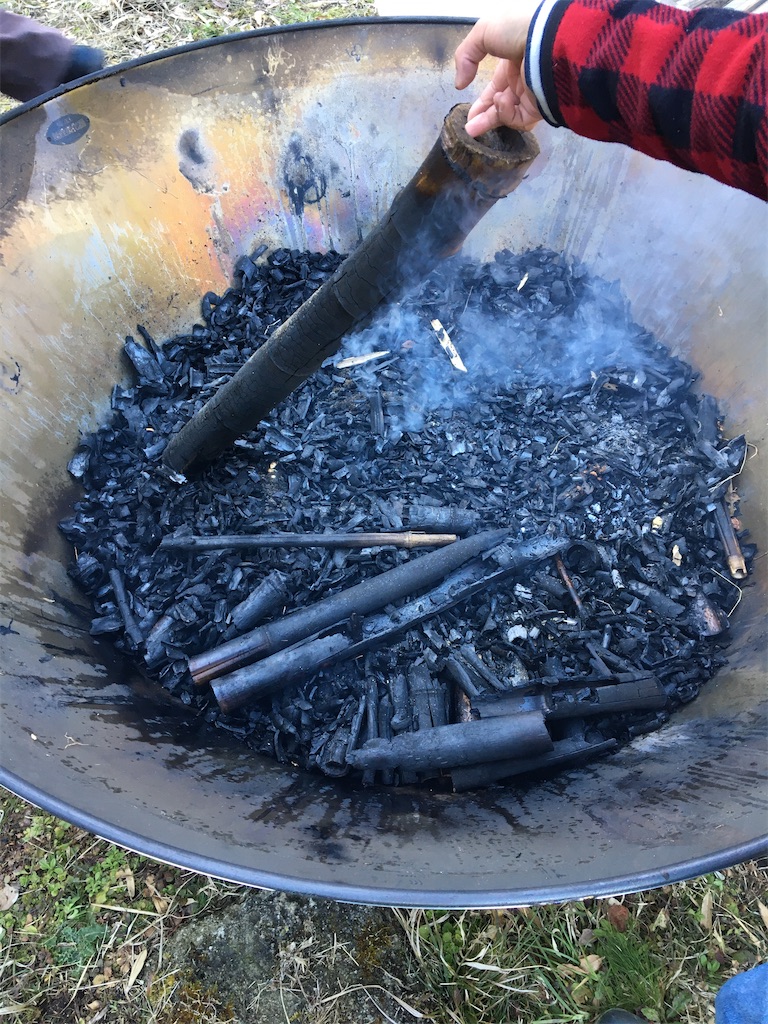
ある程度燃やしたら水をかけて蓋をする。完成
竹炭は、畑の土壌改良に効果があるため、島の農家さんと共同で、提供していく方針。
竹の切り出しから、炭の作成まで1時間程で完了。作業工程と学習プログラムに組み込めることを確認した。
昼食 スターボードに戻り、カレー食べる。

午後は、足湯再開&牡蠣の実食
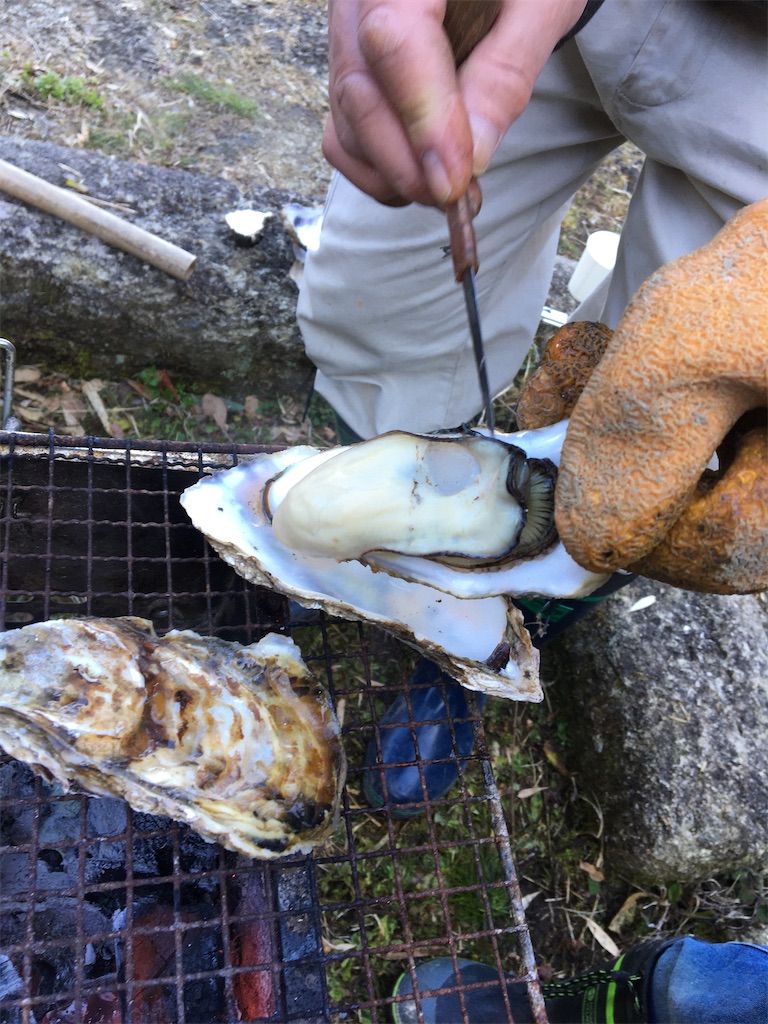

本番さながらに一汗流し、足湯しながら焼き牡蠣とアルコールを手に海を眺めながらいただくことが出来ました笑
今後の予定としては、案内板を島内に18ヶ所設置して行く予定です。
最後に鬼ケ浜の写真を。


20/03/04


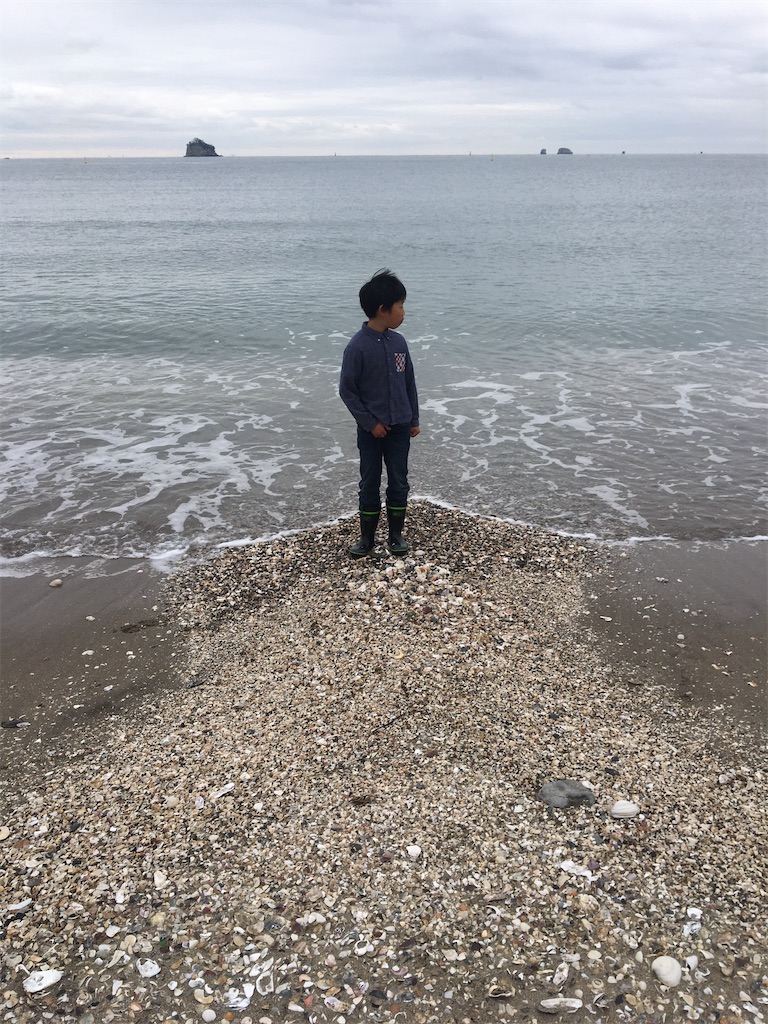
本日も竹炭と竹ボイラーによる足湯を行い、午後からは雨が降ってきたため、看板立ては中止し、プレハブでBBQと焼酎しながら区長さんとお話をさせてもらった。
来年、東日本大震災から10年の節目を迎えることもあり、それに向けた取り組みを話し合うことができた。また、さりげない地元の方々のお話でも伝承による歴史文化などのコアなお話をお聞きすることができ、通時的な歴史ガイドパンフレットの構想が膨らむ。
八ヶ岳美術館 連続講座第二回 鈴木希帆「縄文土器への美のまなざし」
講師:鈴木希帆さん
専門:日本美術史。主に、考古遺物が日本美術通史の中でどのような経緯で語られるようになったのか。
江戸時代後期
滝沢馬琴などの好事家たちの間で、文政7年(1824)5月から翌年11月まで、毎月開催されていた古物愛好の会の短期会を記録した『耽奇漫録』の中で、「屋代弘賢の蔵で亀ヶ岡出土の頗る花瓶を見た」といった記述がある、これが亀ヶ岡土器とされ、古くから鑑賞の対象となっていたといえる。
江戸時代後期の旅行家、博物学者である菅江真澄の寛政10年(1798)の日記『追柯呂能通度(ツガロノツト)』の中で、随筆は、津軽地方の鱈漁と、黒石付近出土の土器についての考察の中で、亀ヶ岡と山内地域の土器の作風を比較することも行なっている。
文政4年(1821)の『菅江真澄遊覧記』「新古祝甕品類之圖(しんこいわいべひんるいのず)」にも見事な亀ヶ岡の注口土器が出土地域、所蔵者の情報を伴って、ここでは蝦夷人の作ではないかと考察している。こうしたことから、江戸時代の縄文土器に対する造形的な関心を捉えることができる。
縄文土器が鑑賞の対象であったという証拠として、縄文土器の内側に金箔を貼って茶道具に仕立てた例がある。(例えば東北大学博物館所蔵、亀ヶ岡出土の変形工字文の高坏)この土器は、津軽藩主が茶器として利用したという伝承がある。そのほかの類例は、関西大学、大英博物館にも所属されているものなどがある。大英博物館の円筒筒形土器は、小シーボルトがヨーロッパに持ち帰った資料の一部ではないかとされている。
江戸時代〜明治時代
1868〜1912 殖産公共政策でのフィラデルフィア万博において、焼き物の標本として出展された中に縄文土器が含まれている。
その後、1880 オーガスタスフランクス(大英博物館キュレーター)博覧会の解説書のJapanese potteryで、亀ヶ岡土器を紀元前640年という年代が記されている。偶然と言えども縄文晩期に相当する。「日本人によると、日本の土器作りの起源は、日本史がはじまる紀元前660年よりも前のはるか遠い時代から始まっており、その時代の茶器に相当する資料がこの土器である。加えてこの紀元前640年という製作年は憶測によってあてがわれたに過ぎない。これらの壺は時より勾玉を収納していた古代の墓から見つかるため、勾玉壺、あるいは、precious cuell base として知られる。」と書かれている。
明治時代初期の古美術研究家の稲川式胤の説を参考にしたと思われる形跡がある。ここで、これらの土器の製作者まで言及されており、ここで「アイノと関係のする現代の日本人に先立つ民族の作」と推測されている。そのようなことが指摘される背景には、これが書かれた前年にエドワード.S.モースや、ハインリヒ.フォン.シーボルトによる日本先住民のプレアイヌ説が指摘されているため、当時の日本人の縄文土器の認識に影響を与えていたといえる。
その亀ヶ岡土器は、その後ロンドンのV&Aミュージアム(当時、サウスケンジントンミュージアム)に寄贈されて現在でも展示されている。
最も古い日本美術通史の文献としては、明治23年の岡倉天心による体系的な美術史講義の講義録である。そこでは、推古時代から扱っており、それ以前の時代は日本美術史で扱う対象ではなかった。
岡倉天心は、1897年(明治30年)パリ万博に際した明治政府の要請で、日本初の日本美術史の本である『日本帝国美術歴史』の編纂主任となるが、その後、岡倉は美術学校騒動で職責を追われ、怪文書を流したたされる東京美術学校の図案科教師である福地復一で出版される。
明治時代〜大正時代
明治から大正の博覧会の時代では、工芸品の輸出政策に伴って、日本国内では工芸品の図案集が多く作られ、縄文土器を用いた図案集も作られている。同じ頃、東京帝国大学理科大学人類学教室の画工に始まり考古学者となった大野雲外(1863-1938)の『模様集 石器時代第一、第二』(1895)に始まる三図案集が出版され、土器の文様は鮮やかな色面構成の作品に変貌した。そこで取り上げている土器も亀ヶ岡などの晩期のものが多くある。
それまでの考古学は人種論争が中心であったが、明治19年創刊の『人類学雑誌』では、「縄文土器造形」という項目が追加されて、土器の文様研究が進んだことも背景として考えられ、その後、考古学の分野では、縄文土器の編年研究が展開される前触れとして捉えられる。
このように、様式的視点による考古学上の編年研究の発展、また文様集や装丁に見られる当時の美術出版の興隆が挙げられ、それを受けて縄文土器に対する平面的な造形観が促進されていったと推測される。
この文様という二次元での造形把握から半世紀後の岡本による三次元の全体造形としての把握に至るまでには空間への関心、さらにはモダニズムを経た前衛芸術家の視点が必要であった。
感想
日本美術史の中で、岡本太郎以前から濱田耕作などにより、何度か考古遺物が取り上げられていたことは初見だった。これまで、考古学の分野から考古遺物を美的な視点で考えることがなされて来なかったというのが私の認識だったが、逆に美術の人間から全くと言っていいほど考古資料に関心が寄せられていたかったという鈴木さんの話から、考えが転換された。しかしながら、イニシアティブのしての岡本の存在はやはり大きいと思う。
岡本以前と以後を、2次元から3次元へ、静的なデザインから動的な空間認識へといった鈴木さんの捉え方や、考古の人間では聞き慣れない、新鮮な言語感覚が面白かった。
八ヶ岳美術館は、「造形」を主題とする印象があり、FUJITAとも交友のあった清水多喜示の彫刻と縄文中期の豪華絢爛な土器が同空間に配置されている。全く異なる要素の両者が対面するも調和、何故か違和感を感じさせない。
また、ドーム状の天井が連結する独特な建築スタイルで、開放感のある空間も楽しめるし、かわいい。
ぜひ一度、足を運んでみてください。